The World Maritime Merchants Forum: Strategic Decisions for Building a New Platform of Trust
Sabrina Chao Affiliations & Notes
Immediate Past President of the Baltic and International Maritime Council (BIMCO), Former Chairman of Wah Kwong Maritime Transport Holdings Limited.
This article examines the maritime industry's evolution through longitudinal (temporal) and latitudinal (spatial) dimensions, tracing its historical trajectory and global dynamics to underscore the pivotal roles of key organizations in addressing critical challenges. From the establishment of the International Maritime Organization in 1948, which introduced conventions like SOLAS and MARPOL to regulate safety and pollution, to the Global Maritime Forum's 2018 innovations in logistics, these entities have shaped the industry's growth. These historical decisions reflect strategic responses to legal, technical, and coordinative crises, setting a foundation for resilience.
Today, the industry faces a new coordinative crisis, driven by digital fragmentation, decarbonization demands, and geopolitical tensions. Emerging at this critical juncture, the World Maritime Merchants Forum (WMMF), launched by China Merchants Group in 2021, aligns with the era's imperatives as the optimal spatial and temporal response. WMMF establishes a trust-based governance platform, complementing IMO and GMF by delivering rapid, actionable solutions—such as the 2022 Green Marine Fuel Call to Action and eBL 100 Commitment—within 6–18 months.
The WMMF's strategic decisions for 2025, including a Green Corridor Taxonomy and autonomous vessel governance via the IMO's MSC, reinforce its role in harmonizing regulations and fostering collaboration amid challenges like the IMO 2020 sulfur cap's 77% emissions reduction and volatile fuel costs. By transcending historical competition cycles and addressing contemporary issues—despite slow digitization—the WMMF lays a stable foundation for the industry's future, positioning it as a transformative force in a volatile global trade landscape.
Keywords :
World Maritime Merchants Forum; Maritime Industry Evolution; IMO; GMF; Trust Governance; Decarbonization; Digital Transformation; Strategic Collaboration
1. Introduction
For centuries, the maritime industry has been the backbone of global trade, navigating a dynamic interplay of competition and innovation. From the wind-powered clippers of the 19th century to the containerized giants of the modern era, competition has driven technological leaps and operational efficiencies, yet it has also precipitated recurring crises—legal, technical, and now coordinative—that have challenged the industry's resilience. The period from 2020 to 2024 was particularly tumultuous, marked by pandemic-induced supply chain disruptions, the Ever Given grounding that halted $9.6 billion in daily trade through the Suez Canal, Red Sea security flare-ups rerouting 12% of global container loops, and the integration of maritime emissions into the EU Emissions Trading System (EU ETS) starting in 2024. These shocks exposed a critical gap: trust—the ability of diverse stakeholders to share data, align incentives, and co-create rules swiftly enough to keep trade flowing.
The World Maritime Merchants Forum (WMMF), initiated by China Merchants Group (CMG) in 2021, emerges as a strategic response to this coordinative crisis. Far from being a conventional industry conference, the WMMF aspires to be a global governance hub, redefining the maritime sector's operating paradigm from zero-sum rivalry to one rooted in trust and collaboration. As Li Xiaopeng, China's Transport Minister, articulated at the inaugural WMMF in 2021, the task is to "jointly safeguard the safety and smooth operation of global logistics and supply chains… and promote a higher level of connectivity and integration of the shipping industry". This vision, echoed across forums in Hong Kong (2022, 2023, 2024), positions the WMMF as a platform to address the digital-green-geopolitical trilemma of the 2020s. Drawing on historical lessons, industry milestones, and insights from four WMMF events, this article argues that the WMMF 2025 represents a strategic pivot toward a trust-based maritime future, uniting stakeholders, harmonizing regulatory and market dynamics, and establishing interoperable digital standards to ensure resilience in a complex global economy.
2. Historical Context: A Cycle of Competition and Crisis
The maritime industry's evolution is a saga of competition driving progress while precipitating crises that demand collective solutions. From 1950 to 1990, a legal crisis emerged as maritime safety and pollution disasters highlighted the absence of global standards. By 1900, thousands of lives were lost annually to accidents, prompting the establishment of the International Maritime Organization (IMO) in 1948. The IMO's conventions, including the International Convention for the Safety of Life at Sea (1974), the International Convention for the Prevention of Pollution from Ships (1973), and the Maritime Labour Convention (2006), transformed chaotic rivalry into structured competition, enabling global trade volumes to soar from 0.55 billion tonnes in 1950 to 11.08 billion tonnes by 2019 (UNCTAD 2020).
Figure 1. Maritime Trade Volume Growth (1950–2019) (Source: UNCTAD, 2020)
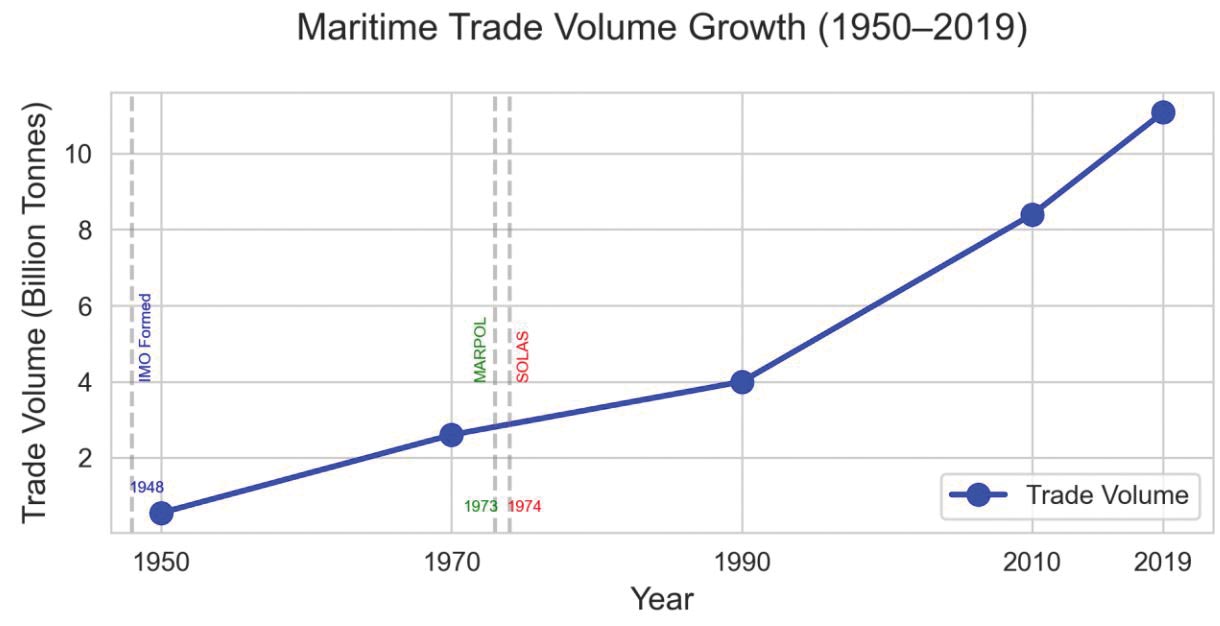
A line chart displaying global maritime trade volumes from 1950 to 2019, with key milestones (IMO formation, SOLAS, MARPOL). X-axis: years (1950–2019). Y-axis: trade volume (0–12 billion tonnes). A blue line rises from 0.55 billion (1950) to 11.08 billion (2019), with annotations for 1970 (2.6 billion) and 1990 (4.0 billion).
From 1990 to 2015, a technical crisis arose as global logistics struggled to keep pace with burgeoning trade. Containerization, pioneered by Malcom McLean in 1956, reduced cargo handling times from days to hours, but ports, shipping lines, and supply chains lagged in coordination, creating bottlenecks (Levinson 2016). The Global Maritime Forum (GMF), launched in 2018, addressed this by promoting innovations such as just-in-time logistics, optimized vessel designs, and digital tracking systems, bringing order to a fragmented ecosystem. As Hong Kong's Chief Executive John Lee noted at the WMMF 2022, "The maritime industry has always adapted to global challenges, leveraging innovation to maintain its role as the linchpin of trade".
Since 2016, a coordinative crisis has emerged, driven by three converging imperatives: digital fragmentation, decarbonization mandates, and geopolitical volatility. Digital technologies like blockchain for supply chain transparency and artificial intelligence (AI) for predictive maintenance promise efficiency but risk fragmentation, with 35 million paper bills of lading circulating annually and over 40 incompatible port-call data formats (FIT Alliance 2023; IAPH 2024). The IMO's 2023 Revised Strategy on Reduction of GHG Emissions from Ships targets net-zero emissions by or around 2050, but regulatory disparities across jurisdictions hinder progress. The IMO Net-Zero Framework, approved in 2025, aims to standardize measures globally, fostering a more equitable transition. Alternative logistics systems, such as air freight (35% of global trade value in 2022) and 3D printing (projected $44 billion market by 2030), challenge shipping's dominance (IATA 2022; Wohlers Associates 2022). Geopolitical tensions, including U.S.-China trade disputes and sanctions affecting 12% of container loops in 2024, amplify the need for real-time contractual flexibility. (Drewry Shipping Consultants 2024).
3. The WMMF: A Strategic Platform for Trust
The WMMF is not merely a forum for discussion; it is a governance hub building a "trust stack" across three mutually reinforcing layers: Digital, Decarbonization, and Governance. Unlike the IMO, which enforces binding regulations over 2–5 years, or the GMF, which sets voluntary visions over 1–2 years, the WMMF delivers executable instruments within 6–18 months, operationalizing trust at market speed. Its mission is to forge a new industry paradigm by uniting stakeholders beyond individual interests, harmonizing regulatory and market dynamics, and establishing interoperable digital standards to ensure interoperability and resilience, positioning the WMMF as a "super-sovereign" platform complementary to existing institutions.
Figure 2. WMMF Trust Stack Framework (Source: Adapted from CMG, 2024)
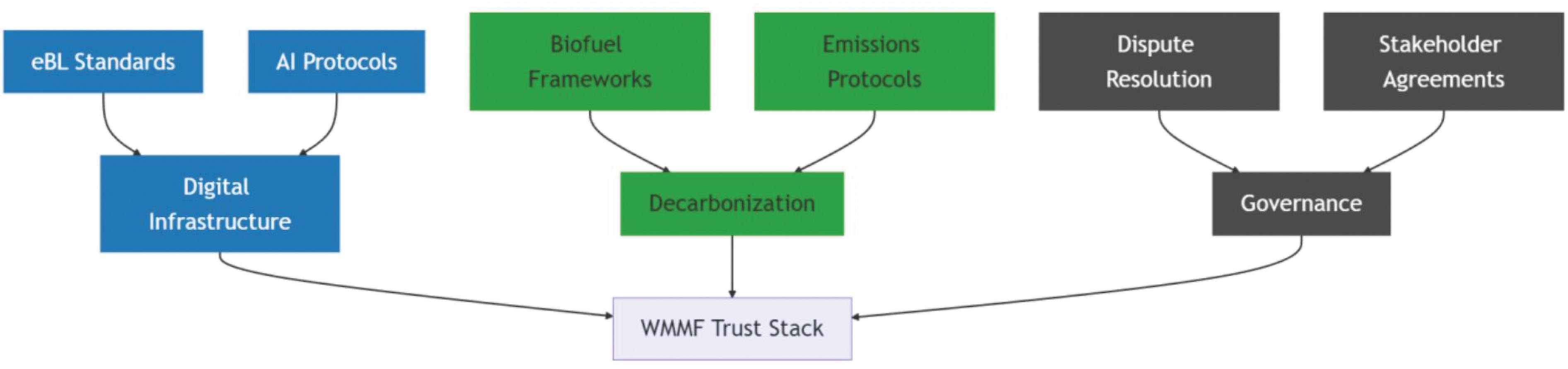
A diagram showing three horizontal layers: Digital (eBL standards, AI protocols), Decarbonization (biofuel frameworks, emissions protocols), and Governance (dispute resolution, stakeholder agreements). Each layer is color-coded (blue, green, gray) with icons (data cloud, leaf, handshake). Arrows connect layers, indicating synergy.
3.1 Uniting Stakeholders Beyond Individual Interests
The maritime ecosystem is fragmented by competing interests: shipowners seek to maximize margins, often cutting costs on fuel or labor; ports compete for cargo volumes, with global throughput reaching 849 million TEUs in 2021; charterers negotiate for favorable terms; and regulators enforce compliance, sometimes at odds with market realities (UNCTAD 2022). These zero-sum dynamic stifles collective action on systemic challenges like decarbonization and digitalization. The WMMF counters this by creating a neutral space for multi-stakeholder agreements that prioritize shared goals over individual gains.
BIMCO's Ship Management Agreement (SHIPMAN 2024), a standardized contract for ship sales, demonstrates how trust-based frameworks streamline transactions and reduce disputes (BIMCO 2024). The WMMF extends this principle to broader challenges, such as carbon emissions accounting. At the WMMF 2022, the "Call to Action on Green Marine Fuel," signed by 40 organizations including major shipping lines, port authorities, and fuel suppliers, committed to accelerating low-carbon fuel adoption, catalyzing a feasibility study for methanol bunkering in Hong Kong, released in November 2024 by CMG.
As Teresa Cheng, Hong Kong's Secretary for Justice, stated at the WMMF 2021, "The shift of maritime activities to the East demands new platforms for cooperation, leveraging technology and trust to rethink supply chains". Carbon emissions accounting is a pressing issue where the WMMF can drive unity. The IMO's 2023 Revised GHG Strategy targets a 20–30% reduction in GHG emissions by 2030, but inconsistent data standards and verification processes create disputes among stakeholders (IMO 2023). The 2025 IMO Net-Zero Framework and Life Cycle Assessment Guidelines aim to standardize emissions accounting and enhance verification, reducing such disputes (IMO 2025). The WMMF could spearhead a global protocol for emissions accounting, leveraging data-sharing agreements to ensure transparency while protecting proprietary interests. For example, a standardized system could integrate data from shipowners, verified by independent auditors like DNV, and shared via a secure blockchain-based platform accessible to regulators and charterers. The 2022 GSBN "Clean-Room" Data Trust pilot, using zero-knowledge proofs validated by DNV CyberSecure Lab, computed carbon-intensity baselines without exposing sensitive voyage data, prefiguring compliance with the EU Corporate Sustainability Reporting Directive (CSRD) (GSBN 2022).
The WMMF's ability to unite stakeholders is further evidenced by its Slot-Swap Contingency Protocol in 2022, which addressed COVID-related lockdowns in South China that threatened to strand 250,000 TEUs of cargo. By convening nine liners and three terminal operators for a real-time capacity-statement exchange, the protocol, operational within 72 hours, reduced rolled cargo by an estimated 60% ,as. This "trust sprint" demonstrates the forum's capacity to foster rapid, collective action in crisis scenarios. Similarly, the WMMF could facilitate voluntary training programs under the IMO's Maritime Labour Convention (MLC), which found 20% of inspected vessels non-compliant in 2022 (ILO 2022). By collaborating with unions, shipowners, and training institutes, the WMMF could standardize skills for low-carbon vessels or digital navigation, ensuring equitable access to a skilled workforce and building trust across the ecosystem.
3.2 Harmonizing Regulatory and Market Dynamics
The tension between regulatory mandates and market flexibility is a perennial challenge in the maritime industry. The IMO's 2020 sulfur cap, part of MARPOL Annex VI, reduced global sulfur emissions from shipping by 77% but exposed shipowners to volatile fuel costs, with very low sulfur fuel oil (VLSFO) prices rising by up to 25% in early 2020, S&P Global Platts indicated. The EU ETS, commencing maritime coverage for intra-EU voyages in 2024 and all voyages into the bloc by 2026, amplifies cost risks, with carbon pricing estimated to add $50–100 per TEU on some routes (European Commission 2023). The transition to alternative fuels, such as biofuels and ammonia, presents similar challenges, requiring coordination across supply chains, infrastructure development, and financing. The WMMF addresses this by serving as a bridge between regulators and market players, facilitating voluntary frameworks that complement mandatory regulations while ensuring commercial viability.
One potential WMMF initiative is a "Biofuel Transition Framework," which could provide guidelines for adopting sustainable fuels while addressing supply chain constraints, infrastructure gaps, and cost concerns. Unlike IMO regulations, which are binding but often rigid, a WMMF-led framework would be iterative, incorporating feedback from shipowners, fuel suppliers, ports, and regulators. For example, the framework could outline phased adoption timelines, prioritize regions with established biofuel supply chains, such as Rotterdam and Singapore (15% of global bunkering in 2022), and recommend cost-sharing models to mitigate financial burdens, as Ship & Bunker showed in its statistics. This approach ensures that sustainability is achievable without undermining the industry's competitiveness.
The Yangtze River Delta Green Corridor MOU, signed at the WMMF 2022, committed 10% of feeder tonnage on Shanghai–Ningbo–Zhoushan routes to be methanol-ready by 2026, resulting in CMG's orders for two 1,800 TEU methanol dual-fuel feeders in February 2024. Hong Kong's Action Plan on Green Maritime Fuel Bunkering, unveiled in November 2024, directly references the WMMF's "Call to Action on Green Marine Fuel" as a catalyst. The Maritime Business Interruption Fund (MBIF), launched in 2023 and underwritten by TT Club, offers parametric payouts indexed to Drewry's Port Congestion Index, cushioning systemic shocks like port delays, which affected 30% of global container slots in 2022. These initiatives build trust by demonstrating that environmental and operational goals can align with economic realities, encouraging broader adoption across the industry.
The WMMF's harmonizing role extends to safety and labor standards. The IMO's International Convention on Standards of Training, Certification and Watchkeeping for Seafarers (STCW) ensures crew competency, but compliance can strain smaller operators, particularly in developing regions. The WMMF could facilitate voluntary certification programs, developed in collaboration with industry stakeholders, to standardize skills for operating low-carbon vessels or navigating digital systems. Such programs would bridge the gap between regulatory requirements and operational capacity, fostering trust in the industry's ability to adapt to global mandates while supporting a resilient workforce.
3.3 Establishing Digital Standards
In the digital era, control over technical standards equates to influence over the industry's future. The internet's TCP/IP protocols, developed through collaborative governance by the Internet Engineering Task Force, standardized data exchange and enabled global connectivity (Cerf and Kahn 1974). The maritime industry requires a similar approach to navigate the complexities of digitalization. With 35 million paper bills of lading circulating annually, each a potential friction point for fraud and delay (FIT Alliance 2023), and over 40 incompatible port-call data formats hampering just-in-time arrivals, digital fragmentation remains a significant barrier to efficiency.
The WMMF is uniquely positioned to lead in defining these standards, ensuring that digital innovations benefit the entire industry rather than select players. The "eBL 100" Commitment, launched at the WMMF 2022, targets 100% electronic bills of lading on liner trades by 2030, aligning with the Digital Container Shipping Association's (DCSA) 1.0 data fields and UNCITRAL's Model Law on Electronic Transferable Records (MLETR) (DCSA 2023). Early pilots between Ningbo and Rotterdam in 2024 reduced document lead times from six days to under 24 hours, demonstrating tangible efficiency gains by CMG in 2022. As John Lee highlighted at the WMMF 2022, "Hong Kong's role as a super-connector in the Greater Bay Area positions it to lead in digital shipping innovations".
Figure 3. eBL Adoption Timeline (2022–2025) (Source: FIATA, 2023; CMG, 2022)
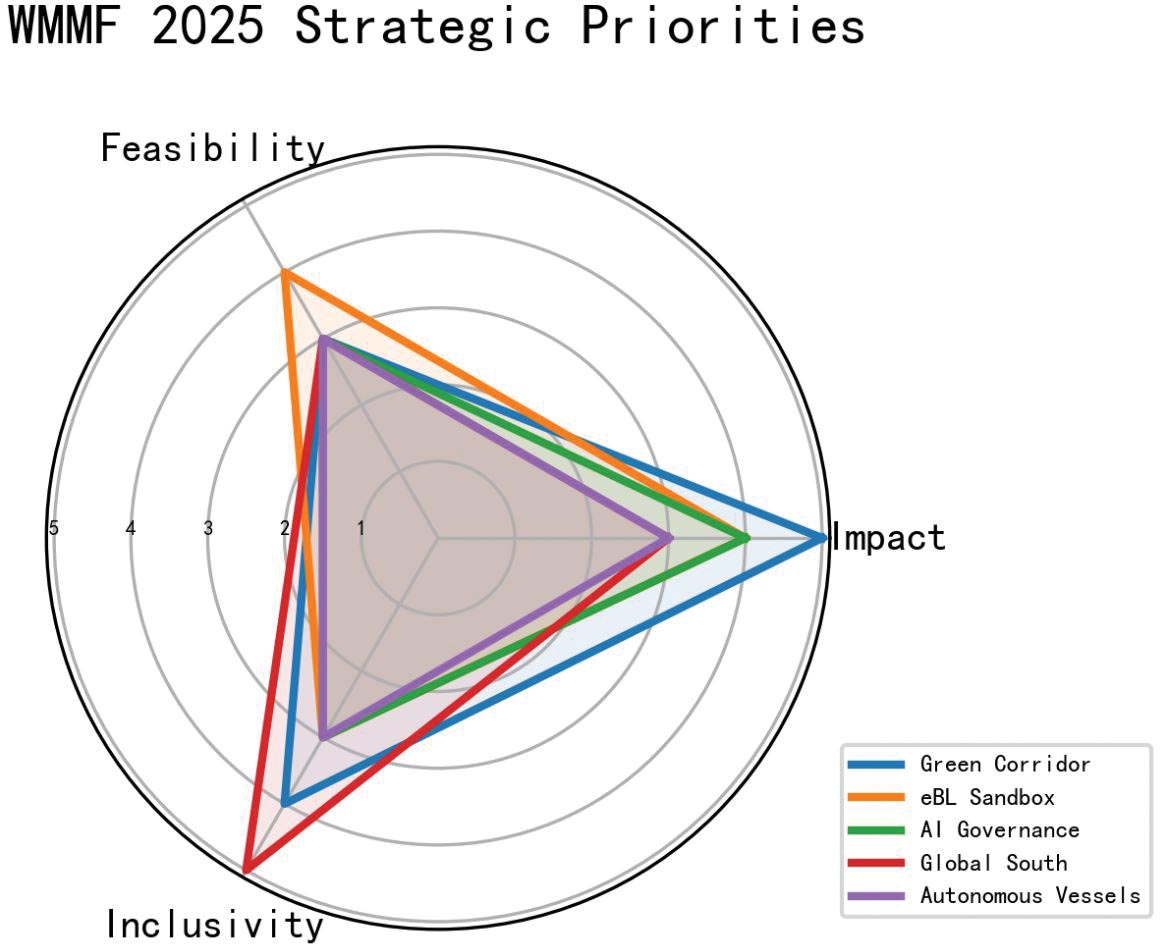
A timeline chart showing eBL adoption milestones. X-axis: years (2022–2025). Y-axis: adoption rate (0–100%). A green line rises from 2.1% (2023) to 100% (2025 goal). Key points: 2022 (WMMF Commitment), 2024 (Ningbo–Rotterdam pilot), 2025 (target). Annotation otes $6.5 billion savings potential.
The Shenzhen Port-Call Optimisation Pilot, conducted in 2023, harmonized estimated time of arrival (ETA) and resource allocation across five carriers and three terminals, reducing berth waiting time by 8% and avoiding 2,600 tonnes of CO₂ emissions, independently verified by DNV. The Smart Carbon Reduction Consortium, established at the WMMF 2024, advances AI-enabled energy management, building on joint R&D with the International Chamber of Shipping (ICS) technical working groups. These standards, integrated with platforms like the Global Shipping Business Network (GSBN), ensure accessibility for smaller operators, mitigating risks of proprietary lock-in.
The WMMF's standard-setting role extends to emerging technologies like AI. In 2022, McKinsey & Company indicates that the predictive maintenance systems, which reduce vessel downtime by up to 20%, rely on interoperable data protocols to share insights across fleets. A WMMF-led initiative could define these protocols, enabling collaboration without compromising proprietary data. CMG's 2024 model ESG evaluation standard, built on "Shipping GPT," provides a common scoring rubric for financiers, insurers, and operators, reducing due-diligence friction and redirecting capital toward compliant tonnage. By fostering transparency and interoperability, the WMMF builds trust in digital systems, ensuring equitable access across the industry.
4. From Forum to Governance Hub
Traditional maritime forums, including early iterations of the GMF, excel at information exchange but often lack the speed to drive systemic change. The WMMF's ambition is to evolve into a governance hub, orchestrating collective action across borders and sectors within 6–18 months, compared to the IMO's 2–5 years for treaty amendments or the GMF's 1–2 years for coalition pledges (China Merchants Group, 2024). This shift is evident in its trust-building mechanisms, such as multi-party data-sharing agreements and contractual innovations.
The Shanghai Declaration Dispute Clause, revised in 2023, mandates pre-arbitration mediation under the China Maritime Arbitration Commission (CMAC), settling 17 cases in an average of 42 days between 2022 and 2023, saving an estimated $4 million compared to London arbitration. The Dynamic Freight Adjustment Clause (DFAC), embedded in BIMCO's SmartCon templates in 2024, incorporates index-linked bunker and freight bands (±15%), adopted in 28% of long-term Asia–Europe contracts in Q1 2024, mitigating fuel price volatility.
The WMMF's governance hub model draws inspiration from other industries. The World Wide Web Consortium (W3C), which standardized HTML, demonstrates how collaborative governance can drive innovation (Berners-Lee 1999). The WMMF could establish a permanent working group, including representatives from BIMCO, ICS, and regional bodies like the Asian Shipowners' Association, to oversee digital standards and ensure continuity beyond annual forums. This group would provide a data feedback loop to inform IMO submissions via member-state delegations and align with GMF's green corridor roadmaps, cushioning regulatory shifts like the EU ETS extension to extra-EU voyages by 2026.
5. A Quiet Revolution in Maritime Governance
The WMMF does not promise immediate profits or operational quick fixes; its value lies in its potential to reshape the industry's underlying rules. The containerization revolution, which reduced shipping costs by 90% between 1956 and 1970, standardized physical trade (Levinson 2016). The WMMF's "trust stack"—digital standards, decarbonization alignment, and governance mechanisms—standardizes trust, fostering a new era of co-opetition. As Leung Chun-ying, Vice Chairman of the CPPCC, emphasized at the WMMF 2022, "We must leverage complementary advantages, promote mutually beneficial cooperation, and create a new global shipping ecosystem supported by an upgraded industry chain".
The WMMF's transformative potential mirrors historical milestones. The IMO brought order to a lawless industry in the 20th century; containerization streamlined global trade; the WMMF can re-engineer the industry's trust architecture. Its initiatives—carbon accounting protocols, biofuel frameworks, digital standards, and dispute resolution clauses—represent incremental steps toward a cohesive value ecosystem. However, significant challenges remain. Stakeholder alignment is critical: large carriers like A.P. Moller-Maersk (4.1 million TEU capacity in 2023) may dominate discussions, potentially marginalizing smaller operators from developing regions (Alphaliner 2023). The WMMF must draw on BIMCO's experience with contracts like Newbuildcon and Supplytime to ensure inclusivity, balancing diverse interests.
Geopolitical tensions, such as U.S.-China trade disputes and Ukraine-related sanctions affecting 12% of container loops in 2024, could complicate collaboration, particularly on data-sharing or emissions protocols (Drewry Shipping Consultants 2024). The WMMF's neutral platform must navigate these tensions diplomatically, fostering consensus without alienating key players. The industry's conservative pace poses another hurdle, with only 2.1% of global bills of lading digitized in 2023, despite potential cost savings of $6.5 billion annually (FIT Alliance 2023). The WMMF must balance ambition with pragmatism, setting realistic timelines for initiatives like eBL adoption or biofuel frameworks. Finally, the WMMF's success depends on translating dialogue into action. Previous forums have faltered when discussions failed to yield tangible outcomes. The WMMF must prioritize measurable deliverables, such as pilot projects or signed agreements, to maintain credibility.
6. Strategic Decisions for WMMF 2025
To sustain its trajectory, the WMMF must make strategic decisions for its 2025 forum, building on its evolution from Shanghai (2021) to Hong Kong (2024):
- Codify a Green Corridor Taxonomy: Leverage the GMF's 62-corridor pipeline to develop a readiness matrix, grading corridors by fuel availability, infrastructure, and financing needs, integrating into lender covenants to align capital with green-fuel demand (Global Maritime Forum 2024).
- Launch a Multilateral eBL Sandbox: Partner with UNCITRAL and the International Chamber of Commerce (ICC) to pilot cross-jurisdictional legal recognition of eBLs, accelerating the DCSA's 2030 goal of full digitization and harmonizing MLETR-compliant rules.
- Expand AI-Assisted Contract Governance: Integrate the DFAC and future clauses into BIMCO's SmartCon API, enabling "trust-by-design" drafting with real-time bunker and freight indices, and pilot AI-based compliance monitoring to feed alerts to financiers and insurers.
- Prioritize Global South Inclusion: Dedicate a 2025 plenary to Africa–South America connectivity, addressing decarbonization cost asymmetries and digital infrastructure gaps, with capacity-building fellowships funded by MBIF premiums.
- Address Autonomous Vessel Governance: Support the ongoing Joint MSC/LEG/FAL Working Group on Maritime Autonomous Surface Ships (MASS) to address port and flag-state liability models, leveraging frameworks like GSBN's clean-room architecture for data simulation to enhance regulatory development (IMO 2024;).
Figure 4. WMMF 2025 Strategic Priorities (Source: Adapted from GMF, 2024; DCSA, 2023)
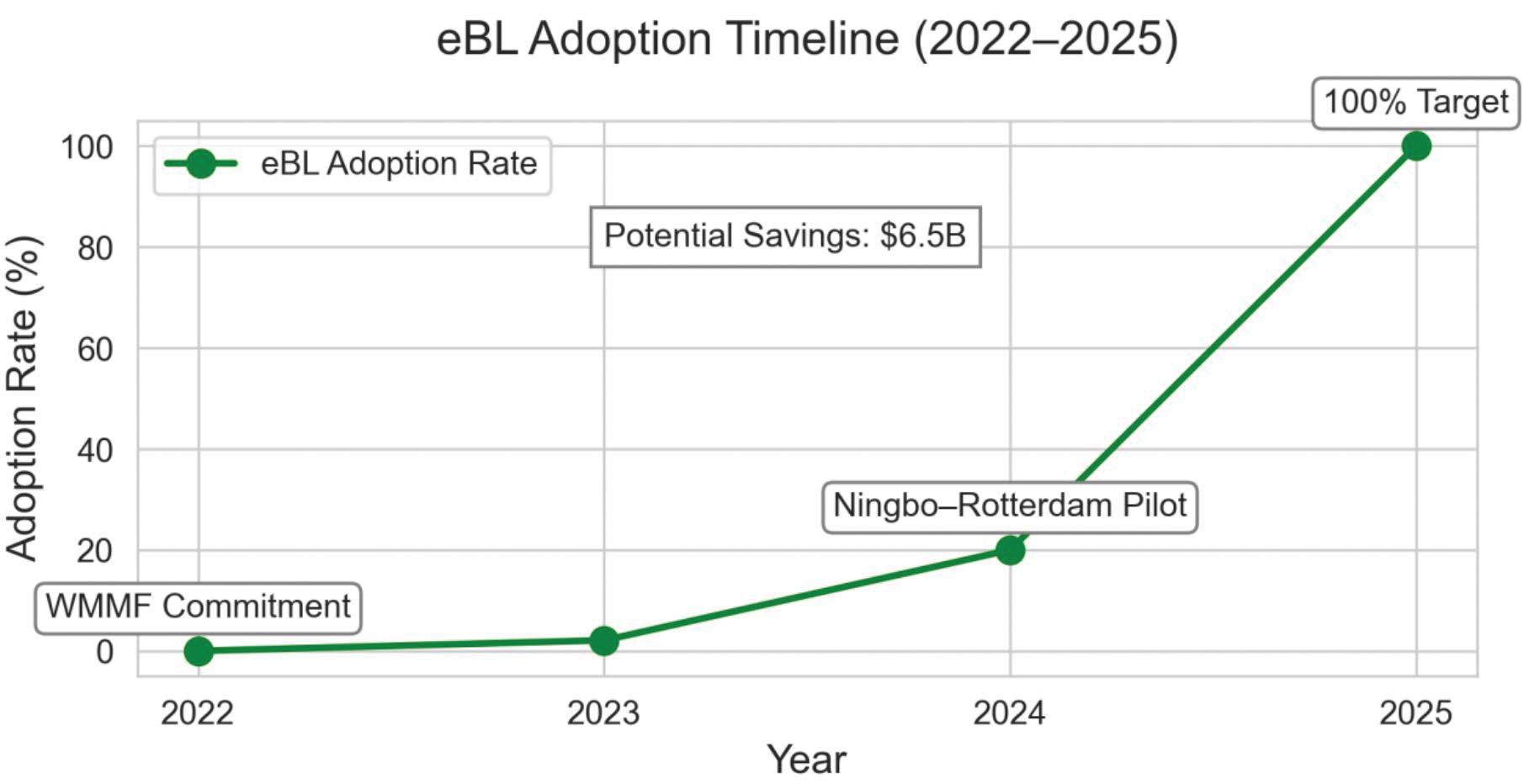
A radar chart comparing five strategic decisions across Impact, Feasibility, and Inclusivity (1–5 scale). Green Corridor Taxonomy: high impact (5), moderate feasibility (3). eBL Sandbox: high feasibility (4), moderate inclusivity (3). AI Governance: high impact (4). Global South: high inclusivity (5). Autonomous Vessels: moderate all (3).
These decisions position the WMMF not as a competitor to the IMO or GMF but as a complementary force, amplifying their efforts by embedding trust into the code, contracts, and capital that move 90% of world trade.
7. Conclusion
The World Maritime Merchants Forum 2025 arrives at a pivotal juncture for global shipping, as the industry navigates digital fragmentation, decarbonization imperatives, and geopolitical volatility. By building a trust stack—digital standards, decarbonization alignment, and governance mechanisms—the WMMF unites stakeholders, harmonizes regulatory and market dynamics, and sets interoperable standards for a resilient future. From its inception in Shanghai to its 2024 focus on ESG standards and AI, the WMMF has evolved from a forum into an operating system for trust.
The WMMF's significance lies in its ability to transcend the industry's historical cycle of competition and crisis. By complementing the IMO's regulatory framework and the GMF's innovation focus, it forms a triad of governance, vision, and collaboration. Its initiatives—from carbon accounting protocols to eBL standards—represent the building blocks of a cohesive, resilient industry. Just as containerization transformed the mechanics of global trade, the WMMF has the potential to reengineer the industry's trust architecture, ensuring its relevance in a world where reliability is paramount. The WMMF is both a strategic decision and an inevitable evolution, a testament to the maritime industry's capacity to adapt and thrive. Its success will depend on fostering inclusivity, navigating geopolitical complexities, and delivering tangible outcomes, positioning it as the cornerstone of a new maritime civilization united by trust, collaboration, and sustainability.
Data Source
All data presented in this paper, including figures, tables, statistical analyses, and projections, are based on data provided by Alphaliner, BIMCO, CMG, DFAC, Drewry, FIT Alliance, GMF, IATA, IAPH, IMO, Lloyd's Register, Maersk, S&P Global Platts, TT Club, and UNCTA.
- Alphaliner. (2023). Top 100 Container Carriers 2023. https://alphaliner.axsmarine.com/PublicTop100/
- Berners-Lee, T. (1999). Weaving the Web: The Original Design and Ultimate Destiny of the World Wide Web. SanFrancisco: Harper.
- Cerf, V., Kahn, R. (1974). A Protocol for Packet Network Intercommunication. IEEE Transactions on Communications, 22(5), 637–648.
- China Merchants Group. (2021, 2022, 2023, 2024). World Maritime Merchants Forum, Hong Kong.
- Digital Container Shipping Association. (2023, February 15). DCSA's Member Carriers Commit to a Fully Standardised, Electronic Bill of Lading by 2030. https://dcsa.org/newsroom/dcsas-member-carriers-commit-to-a-fully-standardised-electronic-bill-of-lading-by-2030
- Drewry Shipping Consultants. (2022, 2024). Container Market Annual Review and Forecast. London: Drewry.
- European Commission. (2023). Directive (EU) 2023/959 of the European Parliament and of the Council Amending Directive 2003/87/EC Establishing a System for Greenhouse Gas Emission Allowance Trading within the Union. Official Journal of the European Union, L 130: 134–202.
- Future International Trade Alliance. (2023). FIT Alliance Electronic Bill of Landing (eBL) Survey 2023. FIT Alliance.
- Global Maritime Forum. (2024). Annual Progress Report on Green Shipping Corridors 2024 edition. Copenhagen: GMF.
- Global Shipping Business Network. (2022, November 30). Blockchain & Data Clean Rooms. https://www.gsbn.trade/post/blockchain-data-clean-rooms
- International Air Transport Association. (2022). Air Cargo Market Analysis 2022. https://www.iata.org/en/iata-repository/publications/economic-reports/air-cargo-market-analysis---december-2022/
- International Association of Ports and Harbors. (2024, October 18). Port Call Optimisation through Data Quality. https://www.iaphworldports.org/news/iaphnews/18760/
- International Labour Organization. (2022). Maritime Labour Convention Compliance 2006, as Amended, Including 2022 Amendments. Geneva: ILO.
- International Maritime Organization. (2023). 2023 IMO Strategy on Reduction of GHG Emissions from Ships. MEPC.377(80). London: IMO.
- International Maritime Organization. (2024). Report of the Maritime Safety Committee on Its 109th Session. MSC 109/20. London: IMO.
- International Maritime Organization. (2025). Draft Revised MARPOL Annex VI (IMO Net-Zero Framework). Circular Letter No. 5005. London: IMO.
- Levinson, M. (2016). The Box: How the Shipping Container Made the World Smaller and the World Economy Bigger. Princeton: Princeton University Press.
- The Baltic and International Maritime Council. (2024). Ship Management Agreement (SHIPMAN 2024). https://www.bimco.org/contractual-affairs/bimco-contracts/contracts/shipman-2024/
- United Nations Conference on Trade and Development. (2020, 2022). Review of Maritime Transport. New York: United Nations.
- Wohlers Associates. (2022). Wohlers Report 2022: 3D Printing and Additive Manufacturing State of the Industry. Fort Collins, Colorado: Wohlers Associates.