Decarbonization Practices in Smart Ports: Case Studies of Singapore and Rotterdam
CHEN Yang, SU Wan, ZHU Jie Affiliations & Notes
CHEN Yang: Chief Editor of Xinde Marine News, Dalian 116026, China. (Correspondence)
SU Wan: Shipping analyst of Xinde Marine News.
ZHU Jie: Shipping analyst of Xinde Marine News.
This study compares decarbonization practices in two global maritime hubs-the Ports of Singapore and Rotterdam, with distinct institutional and strategic profiles. Through a four-dimensional analytical framework including energy transition, digitalization, equipment electrification, and cross-border cooperation, this research identifies different approaches shaped by each port's unique context. Singapore leverages its role as a global bunkering hub to pioneer alternative fuels and smart port systems, while Rotterdam adopts a systemic strategy anchored in industrial decarbonization and EU-driven innovation. Findings offer valuable insights for tailoring sustainable port transitions worldwide.
Keywords :
Smart Ports; Decarbonization; Energy Transition; Singapore; Rotterdam
1. Introduction
As global attention to climate change intensifies, ports play a critical role in global carbon emissions. Maritime activities account for approximately 2.9% of total global CO2 emissions (IMO, 2023). As hubs of vessel traffic and industrial activity, ports often surpass inland areas in emission intensity (Ducruet, 2024). For example, the Port of Rotterdam emits over 13.7 million tonnes of CO2 annually (Ducruet and Hallouët, 2022). As strategic nodes in global logistics chains, the decarbonization of ports is vital for achieving international climate goals.
Against this backdrop, the concept of the "smart port" has emerged as a strategic pathway for accelerating green transitions. Originating around 2008 within the global smart city movement, smart ports reflect the digital transformation of critical transport infrastructure through the application of advanced Information and Communication Technology (ICTs) to enable automated, intelligent, and environmentally efficient operations. In recent years, many ports have adopted smart technologies to simultaneously address operational and environmental challenges (Belmoukari, 2023).
Existing research highlights that smart technologies such as the Internet of Things (IoT) and artificial intelligence (AI) can significantly enhance operational efficiency and safety in ports (Lam and Notteboom, 2014). In the context of green ports, key decarbonization measures have been identified as shore power deployment, clean fuel alternatives, electrification of equipment, and adoption of renewable energy (Minh, 2025). However, gaps remain: most studies focus on individual ports or technologies, lacking a comparative or systemic perspective. Furthermore, few have examined the interaction between digitalization and decarbonization, and limited attention has been paid to the governance structures and collaborative mechanisms underpinning port decarbonization.
To address existing research gaps, this study conducts a comparative analysis of the Ports of Singapore and Rotterdam, which are two global hubs with contrasting institutional environments, strategic orientations, and decarbonization pathways. Singapore adopts a government-led approach focused on digital innovation and operational efficiency, while Rotterdam, embedded in a multi-level European governance system, emphasizes energy transition and clean energy deployment (Maritime and Port Authority of Singapore, 2022) Singapore prioritizes LNG bunkering infrastructure, whereas Rotterdam leverages its industrial ecosystem to advance hydrogen utilization, carbon capture and storage (CCS), and renewable energy integration (Port of Rotterdam Authority, 2025). Comparing these distinct models yields valuable insights into the diverse trajectories of smart port decarbonization.
This study develops a multidimensional analytical framework to evaluate key initiatives in smart technology deployment, emission reduction, policy support, and governance coordination. By identifying shared practices and divergences, the study provides actionable recommendations to guide the green transition of smart ports globally.
2. Methodology
2.1 Comparative Case Study Approach
The decarbonization of ports is a complex, multidimensional process that involves changes in energy systems, technological innovation, policy instruments, and governance mechanisms. To explore how smart ports pursue decarbonization under varying institutional contexts and strategic priorities, this study adopts a comparative case study approach, focusing on the Ports of Singapore and Rotterdam.
The comparative case study approach offers several advantages. Compared to single-case studies, it enables the identification of both shared experiences and divergent pathways, revealing the influence of institutional settings and policy frameworks on green port development. Moreover, unlike purely quantitative approaches, it is well suited to unpack implicit institutional dynamics, governance logic, and transnational coordination processes, offering context-rich insights for both theory building and policymaking (Bartlett and Vavrus, 2017).
2.2 Analytical Framework
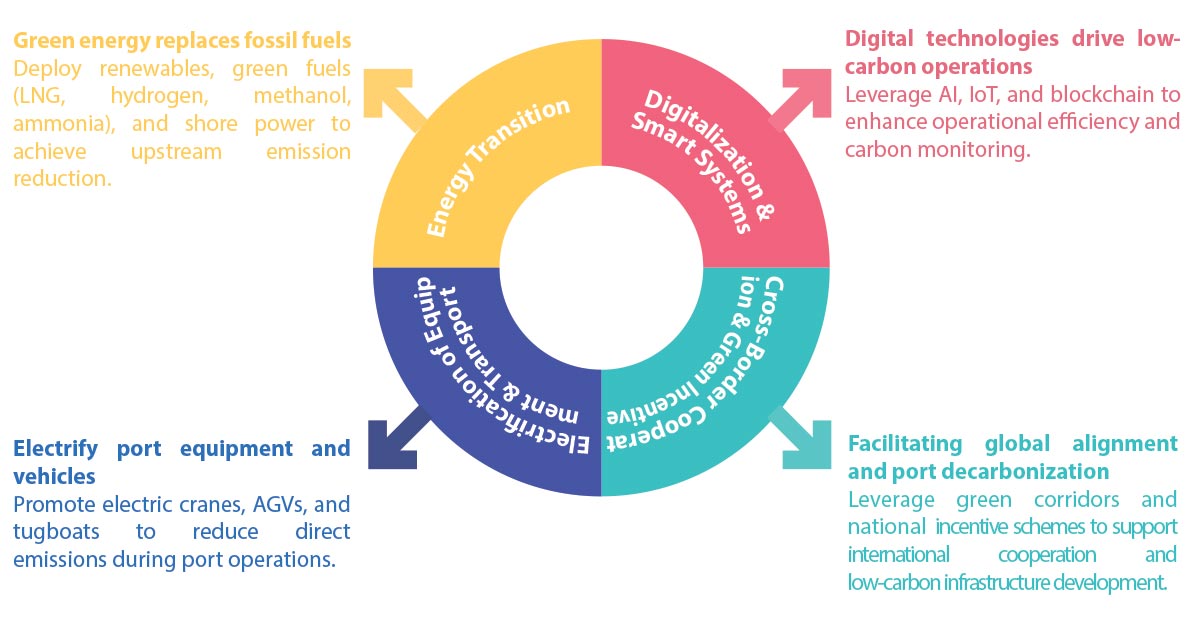
To systematically examine the multidimensional nature of smart port decarbonization, this study develops an analytical framework (see Figure 1) that integrates technological pathways with institutional mechanisms. The framework is structured around four interrelated dimensions. Firstly, energy transition captures the port's shift toward low- and zero-carbon energy systems, focusing on renewable energy deployment, green fuel infrastructure, and shore power implementation. Secondly, digitalization and smart systems examine how technologies such as AI, IoT, and blockchain are leveraged to enhance operational efficiency and enable carbon monitoring and optimization. Thirdly, electrification of equipment and transport addresses the replacement of conventional machinery and vehicles with electric alternatives, assessing progress in reducing on-site emissions. Finally, cross-border cooperation and green incentives analyze how international partnerships and policy-driven incentive schemes facilitate coordinated transitions and enable sustainable port development. Together, these dimensions provide a comprehensive lens for comparing decarbonization strategies in the Ports of Singapore and Rotterdam.
Figure 1. Analytical Framework for Decarbonization Practices in Smart Ports
3. Case Analysis: Singapore and Rotterdam
3.1 Overview of Singapore Port and Rotterdam Port
3.1.1 Overview of the Port of Singapore
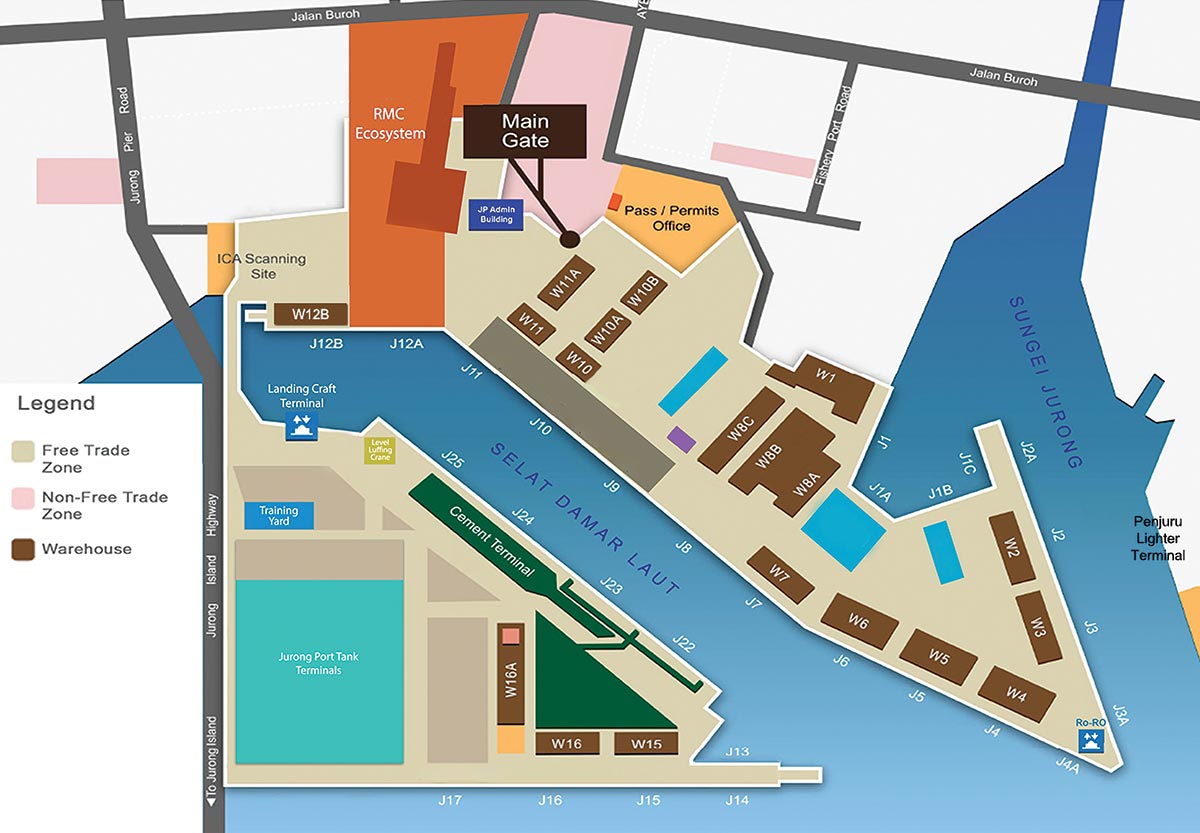
Singapore's maritime operations are structured around two principal commercial terminal operators: PSA Corporation Limited and Jurong Port. The port infrastructure spans seven strategic locations—Tanjong Pagar, Keppel, Brani, Pasir Panjang, Sembawang, Jurong, and Tuas, collectively capable of servicing diverse vessel types including container ships, bulk carriers, ro-ro vessels, general cargo freighters, coastal traders, and lighters. PSA Corporation Limited, as the dominant container handler, integrates five terminals into a unified operational network (Figure 2). Its flagship Tuas Port commenced operations in September 2022 with three initial berths, representing Singapore's next-generation container handling infrastructure. Complementing this ecosystem, Jurong Port functions as the nation's primary multipurpose gateway for conventional and bulk cargo (Figure 3). The facility specializes in processing steel products, cement, project cargo, and copper slag, employing an extensive pipeline and conveyor network to ensure both operational efficiency and environmental compliance.
Figure 2. Port Layout of PSA Corporation Limited (Source: PSA Singapore)
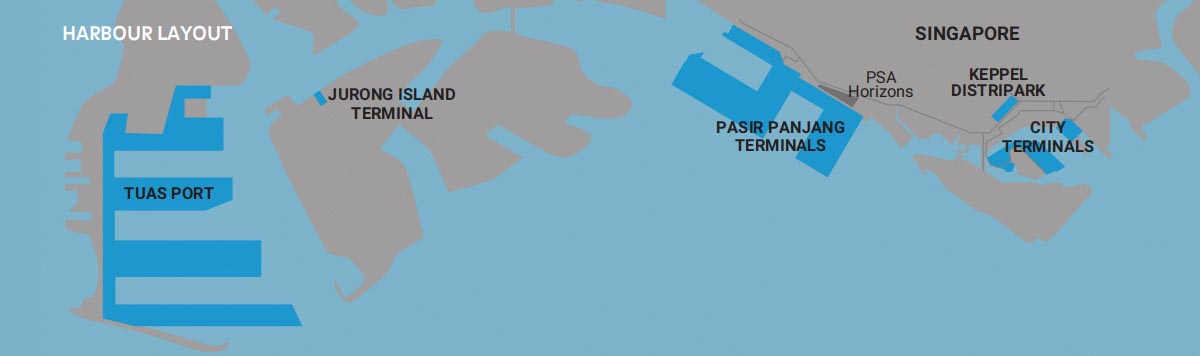
Figure 3. Layout of Jurong Port (Source: Jurong Port)
3.1.2 Overview of the Port of Rotterdam
Rotterdam Port functions as a sprawling maritime-industrial complex, encompassing 12,500 hectares of land and water with over 6,000 hectares dedicated specifically to industrial operations. Spanning 42 kilometers along the river, the port accommodates approximately 28,000 seagoing vessels and 91,000 inland vessels annually, solidifying its position as Europe's preeminent cargo hub. Its 79.5-kilometer quay system features 131 coastal and inland terminals, with maximum depths reaching 24 meters to service the world's largest VLCCs. The port's crown jewel is its cutting-edge ECT container terminal, ranked among the globe's most advanced facilities. In 2024, Rotterdam handled 435.8 million metric tons of cargo, including 13.8 million TEUs, ranking 12th globally in container throughput.
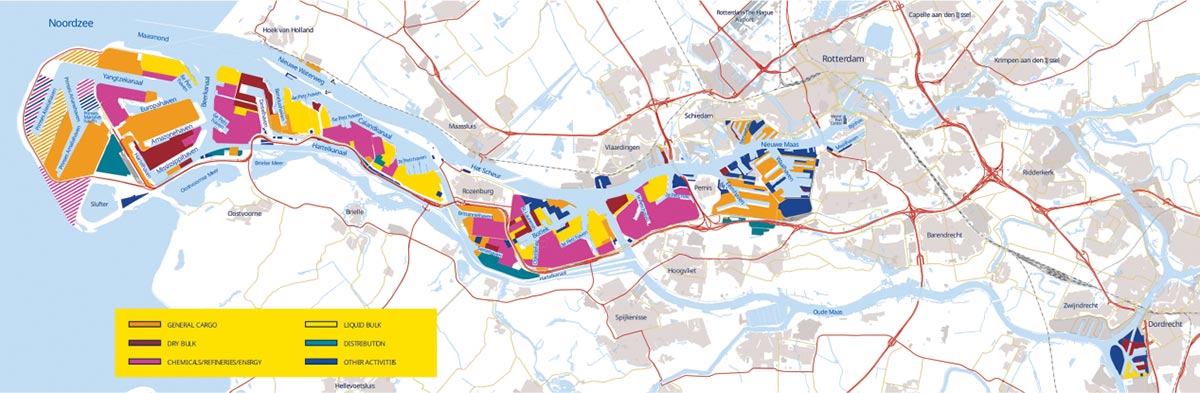
Strategically configured along an east-west axis extending from the urban center toward the coastline, Rotterdam's operational landscape comprises five key zones: Waalhaven, Eemhaven, Botlek, Europoort and Maasvlakte (Figure 4). These world-class terminals enable automated high-speed processing across all major cargo categories: containers, dry bulk, liquid bulk, breakbulk, and LNG (Figure 5). The integrated design optimizes cargo flows while maintaining Rotterdam's competitive edge through continuous technological innovation.
Figure 4. Port Layout of Rotterdam (Source: Port of Rotterdam)
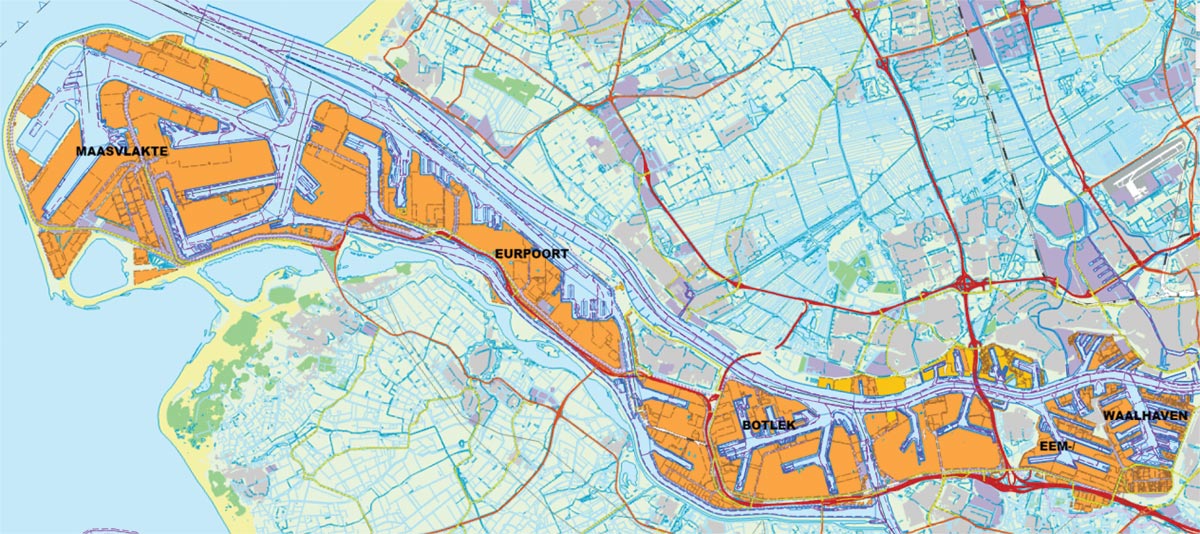
Figure 5. Functional Division of Rotterdam Port Terminals (Source: Wikipedia)
3.2 Energy Transition
3.2.1 Singapore Port's Energy Transition
(1) Bunker Fuel Supply
Singapore has strengthened its position as the world's top marine fuel hub through groundbreaking green bunkering initiatives. The port completed global firsts in methanol and ammonia ship fueling, accelerating alternative fuel adoption worldwide. Significant progress was made in establishing standards and conducting trials for next-generation fuels like methanol and liquefied bio-methane. In 2024, Singapore's alternative marine fuel sales exceeded 1 million metric tons for the first time, reaching 1.34 million MT. Biofuel blends led with 883,000 MT (69% annual growth), followed by LNG at 462,000 MT. Methanol bunkering hit 1,600 MT, while ammonia debuted at 9.74 MT. Meanwhile, low-sulfur fuel demand dropped by 1.64 million MT due to scrubber installations on vessels, highlighting Singapore's strategic shift toward multi-fuel leadership.
Table 1. Fuel Sales in Singapore Port (Source: MPA Singapore)
|
Fuel |
BUNKER SALES (in '000 tonnes) |
Growth Rate (%) |
|
|
2023 |
2024 |
||
|
Traditional |
51189.1 |
53575.2 |
4.66 |
|
Bio-blended |
523.8 |
882.8 |
68.53 |
|
LNG |
110.9 |
464.0 |
318.39 |
|
Methanol |
0.3 |
1.6 |
433.33 |
|
HSFO |
16722.4 |
20147.9 |
20.48 |
|
LSFO |
31218.5 |
29581.3 |
5.24 |
①Biofuel
In 2024, biofuel blend sales surged nearly 70% year-on-year to 0.88 million tonnes, demonstrating accelerated industry adoption as a near-term emissions reduction solution. With commercially available blends now spanning all concentrations up to B100, Maritime and Port Authority of Singapore (MPA) spearheaded critical quality infrastructure development through the Singapore Standards Council. This initiative led to the 2022 upgrade of marine biofuel specifications (WA 2:2022), followed by the May 2025 publication of Technical Reference TR 140:2025—collectively establishing comprehensive bunkering quality protocols for Singapore's expanding alternative fuel market.
②LNG
LNG bunkering sales surged from 110,000 tonnes in 2023 to 460,000 tonnes in 2024, prompting regulatory action to scale supply infrastructure. In December 2024, MPA launched an Expression of Interest (EOI) that attracted 14 proposals—eight featuring bio-methane and e-methane solutions offering lower lifecycle GHG emissions. Significantly, multiple submissions demonstrated industry readiness for offshore LNG reloading operations to complement existing onshore terminals.
③Methanol
Singapore accelerated its pathway to commercial methanol bunkering through two landmark operations in 2024. Building upon the world's first ship-to-containership methanol transfer in 2023, the port achieved a 1,340 MT ship-to-ship delivery of blended methanol, and Singapore's inaugural Simultaneous Bunkering and Cargo Operation, which is a preferred efficiency model for container vessels. Crucially, these trials validated the integration of mass flow metering systems with digital bunkering protocols for methanol. Collectively, these advances provide critical operational frameworks to scale methanol as a viable marine fuel alternative.
④Ammonia
Singapore achieved a critical maritime decarbonization milestone through the April-May 2024 sea trials of the ammonia-powered Fortescue Green Pioneer, where 4.4 tonnes of liquid ammonia were successfully tested alongside conventional fuels under rigorous safety protocols at Raffles Anchorage. These trials—monitored via an Emergency Operations Center with ammonia plume modeling and drone surveillance, established foundational operational frameworks for global ammonia bunkering. Simultaneously, Eastern Pacific Shipping committed to six ammonia dual-fuel vessels for Singapore registry from 2026 through MoUs advancing bunkering standards and crew training. Complementing this, two consortia are developing end-to-end solutions for low-carbon ammonia power generation and bunkering on Jurong Island, aligning with Singapore's National Hydrogen Strategy. This integrated approach leverages ammonia's established supply chain as a hydrogen carrier, positioning Singapore to deploy among the world's first direct-ammonia power plants while pioneering scalable marine fuel solutions.
(2) Electric Harbour Craft Charging Station
Singapore is accelerating electric harbour craft (e-HC) adoption through e-HC Design, e-HC Charging Infrastructure and e-HC Financing and Insurance. Following a July 2023 Expression of Interest that yielded 55 proposals, MPA shortlisted 11 e-HC designs for passenger launches and cargo lighters. Concurrently, MPA launched the Future Ship & Systems Design program to transform the sector through integrated solutions spanning sustainable vessel engineering, microgrid-enabled charging infrastructure, and operational intelligence, collectively targeting cost reduction, efficiency gains, and emission cuts. This technological expansion includes developing Southeast Asia's first lithium-titanate-battery-powered electric tugboat (scheduled for 2026 completion).
Infrastructure development reached a milestone with Singapore's first e-HC charging point commissioned at Marina South Pier in April 2024. Owned by Pyxis-SP Mobility, this pilot facility provides critical operational data while the newly established national standard TR 136 ensures charging system safety and interoperability. Financially, MPA promotes the Enterprise Financing Scheme-Green enabling 70% risk-sharing for lenders, creating viable pathways for fleet electrification. This holistic approach positions Singapore at the forefront of maritime electrification.
3.2.2 Rotterdam Port's Energy Transition
Figure 6. Four Types of Pillar Energy Transition Projects (Source: Port of Rotterdam)
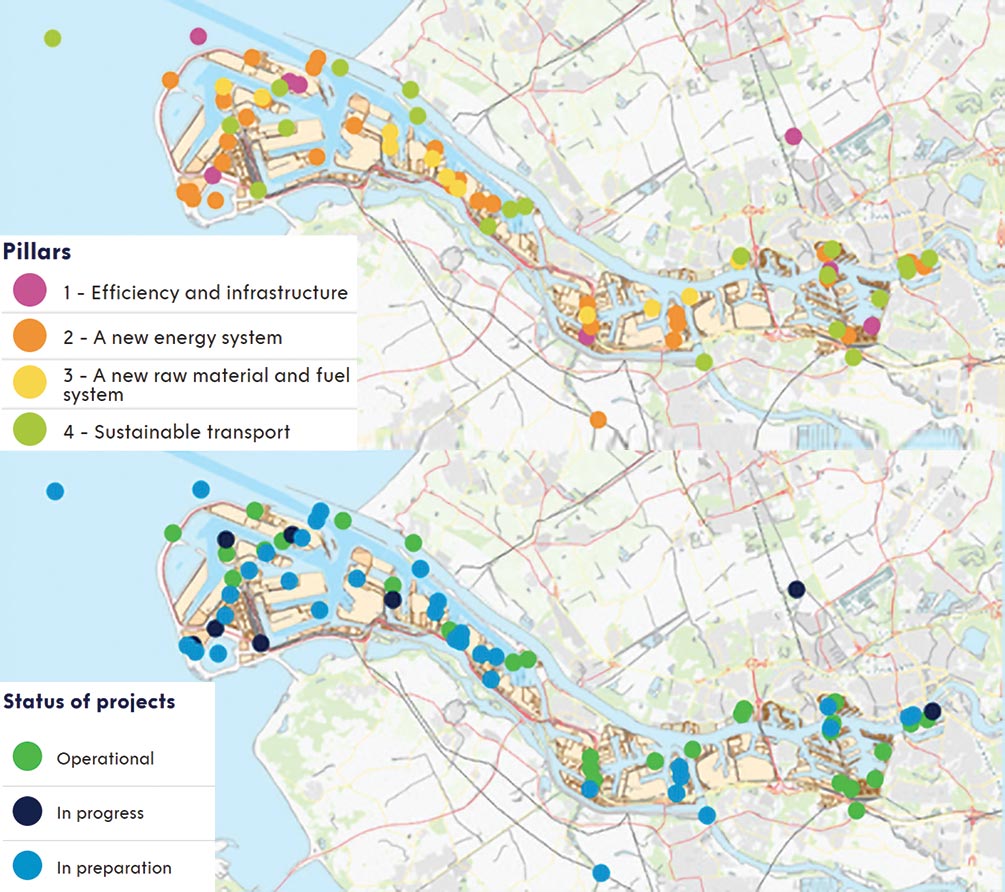
Rotterdam Port is executing more than 80 decarbonization projects through industry-government partnerships, structured around four core pillars as Figure 6 illustrates:
Pillar 1: increasing the efficiency of existing industry, and building infrastructure for heat, CO2, electricity and hydrogen. As Figure 7 demonstrates, Rotterdam's infrastructure advances feature CO2 storage beneath the North Sea and industrial waste heat distribution for residential heating, with imminent expansion to commercial/agricultural facilities. Concurrently, wind energy integration accelerates alongside hydrogen-ready industrial retrofits, driving comprehensive sustainable infrastructure development.
Figure 7. Infrastructure Construction of Rotterdam Port (Source: Port of Rotterdam)
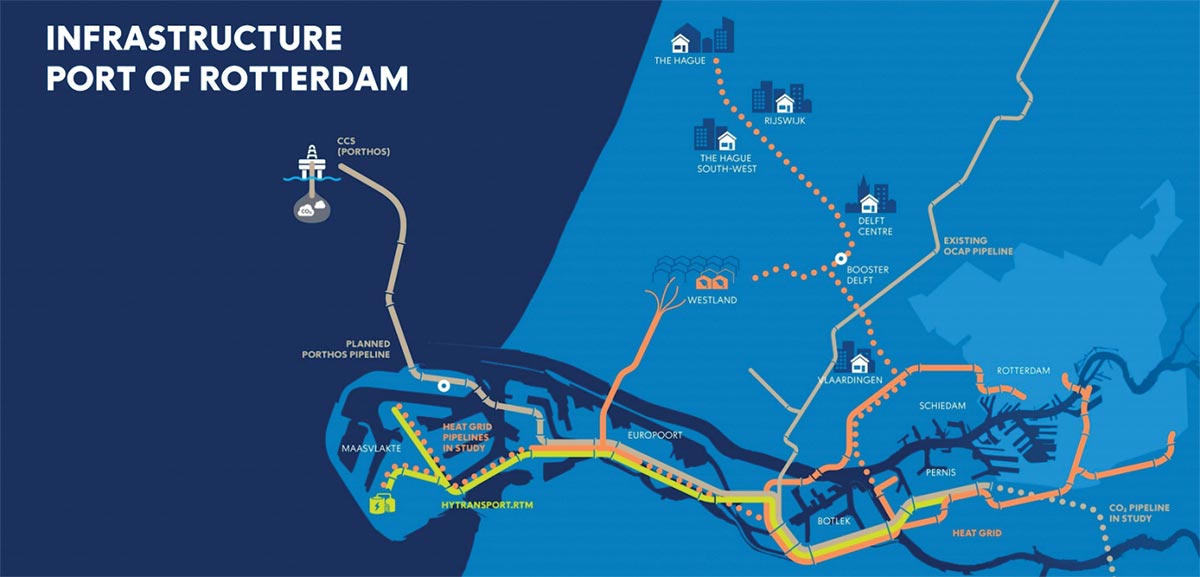
Figure 8. Current Hydrogen Energy Projects in the Port of Rotterdam (Source: Port of Rotterdam)
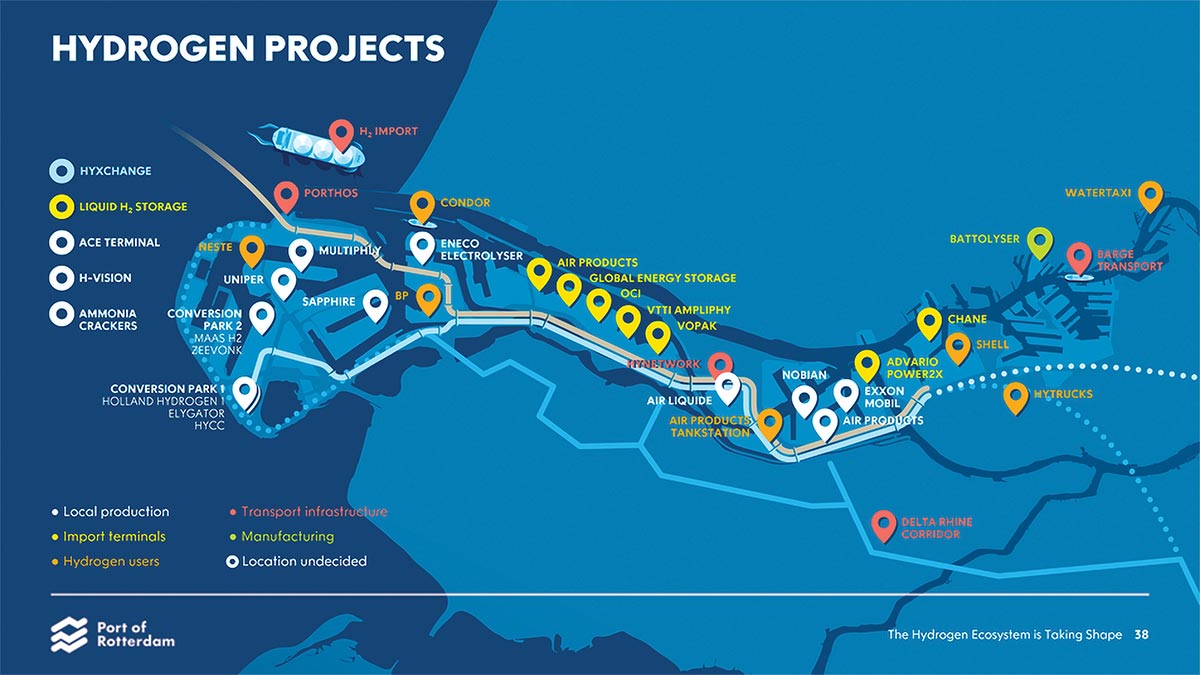
Pillar 2: renewing the energy system by switching from fossil fuels to green electricity and hydrogen. Rotterdam Port is developing a hydrogen ecosystem focused on industrial production and utilization, alongside import/transshipment to Northwest Europe as Figure 8 shown.
Pillar 3: moving to a new materials and fuel system. The Netherlands pursues dual 2050 targets: climate neutrality and a full circular economy. For Rotterdam's chemical industry, this mandates transitioning all petroleum-based feedstocks to waste-derived materials, hydrogen, CO2, and biomass, exemplified by plastic/battery recycling and repurposed wind turbine blades.
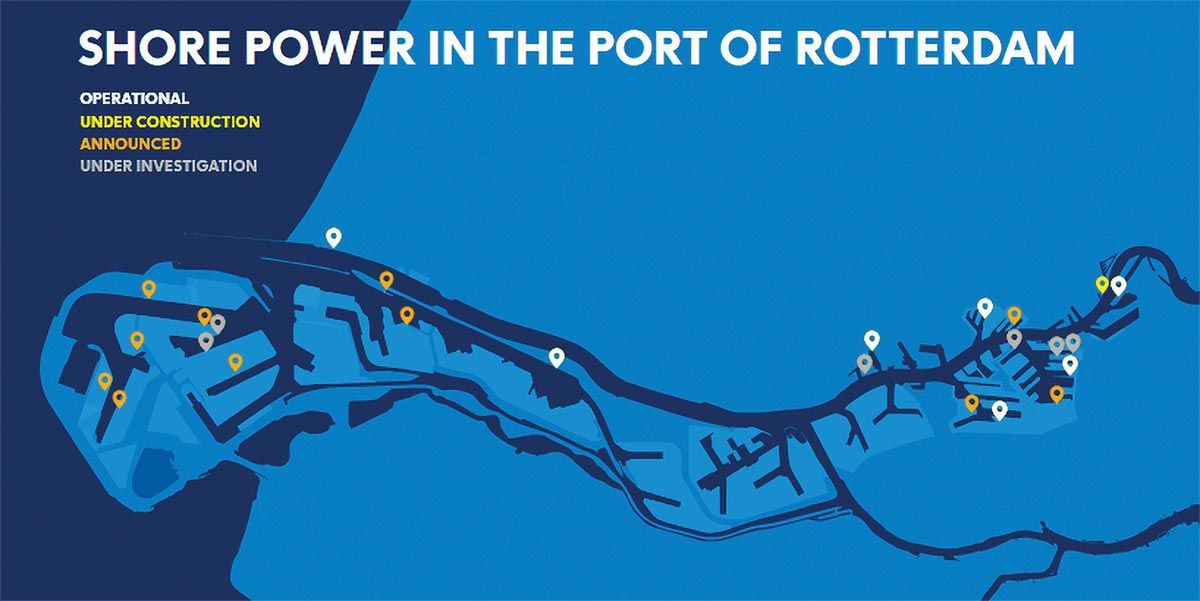
Pillar 4: making transport more sustainable. Shore power deployment is central to Rotterdam Port's decarbonization strategy, particularly for ocean-going vessels and inland shipping, as shown in Figure 9. By mid-2024, operators including Heerema, Stena Line, Boskalis, DFDS, and Royal Roos implemented shore power at Rotterdam Short Sea Terminals' deep-sea berths. The Port Authority expects Rotterdam's cruise terminal to commence shore power operations this year while expanding public shore power infrastructure for inland vessels such as Waalhaven's Terminal 3.
Figure 9. Current Shore Power Projects in the Port of Rotterdam (Source: Port of Rotterdam)
3.3 Digitalization and Smart Systems
3.3.1 Singapore Port's Digitalization and Smart Systems
(1) The MPA Digital Port Ecosystem
MPA earned the Public Service Transformation Award for its Digital Port Ecosystem, a critical enabler during the COVID-19 pandemic that accelerated vessel turnaround through integrated platforms including digital PORT, digital OCEANS, digital Ship, digital PORT Global, and the Singapore Maritime Datahub. Central to this ecosystem, the digital PORT Phase 2 launched its Just-in-Time Planning Platform in October 2023 for container, general, and bulk cargo sectors, significantly reducing operational delays and carbon emissions—with current trials expanding to oil terminals and full tanker implementation targeted by end-2025. Singapore was the first in the world to use mass flow meters for bunker fuels in 2017. It was also the first in the world to use electronic bunker delivery notes (e-BDNs) for the entire port ecosystem. Developed through more than 100 industry trials involving over 20 companies, these innovations digitized requisition forms and checklists, achieving unprecedented operational transparency while saving an estimated 40,000 man-days annually. Collectively, these digital advancements establish Singapore as a benchmark for maritime operational excellence and sustainable transformation.
(2) Deploying AI and Automation in Port Operations
MPA is advancing digital transformation at the port through collaborative initiatives with operators. Key projects include developing a Next-Generation Vessel Traffic Management System for real-time maritime situational awareness, while PSA deploys private 5G networks to automate guided vehicles and cranes at Tuas Port and Pasir Panjang Terminal. Furthermore, PSA is exploring 5G applications for smart grid management and cargo handling systems to enhance operational efficiency.
3.3.2 Rotterdam Port's Digitalization and Smart Systems
Rotterdam's digitalization and smartness are reflected in some pilot projects: Collaborating with Tanger Med (Morocco), the port implemented digital documentation solutions that reduced container delays and prevented food waste through stakeholder-driven systems; The Starlings pilot project enables dynamic electricity/utility exchanges among six industrial plants and two grid operators, targeting 5% operational cost savings; Port Alert constitutes an innovative digital platform that delivers real-time logistics intelligence to container supply chain stakeholders, with particular efficacy in road transport operations. This system equips terminal planners, depot managers, and truck drivers with continuous access to dynamic operational metrics—including congestion, disruptions and turnaround times—thereby enabling data-driven resource allocation and significantly enhancing route optimization efficiency.
3.4 Electrification of Equipment and Transport
3.4.1 Singapore Port's Electrification of Equipment and Transport
Within Tuas Port, versatile and maneuverable electrified automated yard cranes, and automated guided vehicles (AGVs) will be used for the transport of containers between the yard and the wharf. PSA Corporation collaborates with technology partners to co-develop scalable automation solutions for cranes and AGVs, designed to support phased operational expansion. Beyond equipment electrification, which reduces carbon emissions by approximately 50% compared to diesel alternatives, PSA implements a smart grid system and constructs Green Mark Platinum-certified sustainable buildings. The Tuas Maintenance Base Administrative Building, recognized as the port's first Super Low Energy facility by Singapore's Building and Construction Authority, consumes 58% less energy than conventional structures and achieves net-zero status through on-site solar generation that fully offsets annual electricity consumption.
3.4.2 Rotterdam Port's Electrification of Equipment and Transport
The launch and deployment of drones at the Port of Rotterdam is in line with the Port of Rotterdam Authority's strategic goal of creating a safer, sustainable and efficient port, and aims to create a professional test platform for drone service providers. In the future hybrid port architecture, drones will share cargo transportation and personnel transportation tasks with ships, trains, and trucks. Currently, the Port of Rotterdam is working with enterprises and regulatory authorities to improve airspace management and operating specifications in stages to pave the way for the application of drones.
3.5 Cross-Border Cooperation and Green Incentive
3.5.1 Singapore Port's Cross-Border Cooperation and Green Incentive
(1) Global Partnership for Green and Digital Shipping Corridors
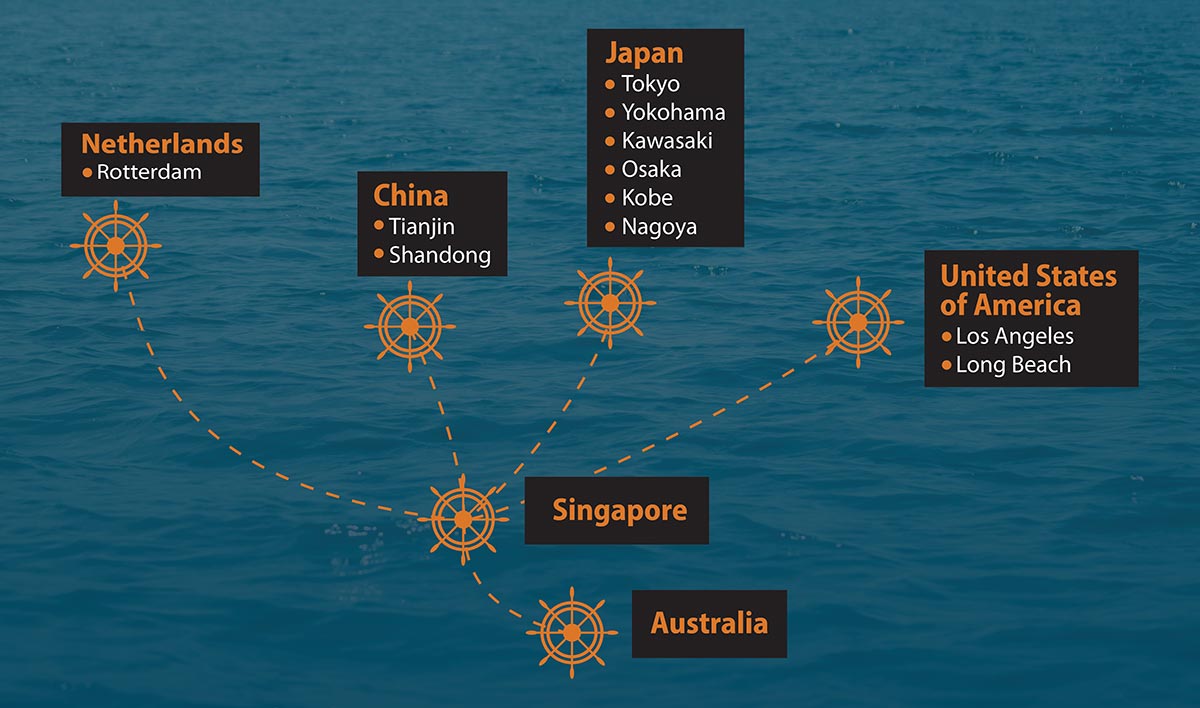
MPA collaborates with a network of Global Partnership for Green and Digital Shipping Corridors (GDSC) partners on green and digital shipping. Key partners include: Port of Rotterdam, Port of Los Angeles and Port of Long Beach, China's Shandong Provincial Transport Department and Tianjin Municipal Transportation Commission, and so on, as depicted in Figure 10.
Figure 10. Global Partnership for Green and Digital Shipping Corridors (Source: MPA Singapore)
(2) Maritime Singapore Green Initiative
Maritime Singapore Green Initiative (MSGI) was launched in 2011 with a commitment of $100 million over five years. In 2024, MSGI committed an additional $50 million to support five key programmes: Green Ship Programme, Green Port Infrastructure Programme, Green Craft Programme, Green Energy and Technology Programme, and Green Awareness Programme. The MSGI has been revised to take effect on January 1, 2025, integrating the original Green Port Plan into the Enhanced Green Ship Plan, and providing 100% port usage fee reduction for ocean-going ships using zero-carbon fuels or technology.
3.5.2 Rotterdam Port's Cross-Border Cooperation and Green Incentive
(1) Green and Digital Shipping Corridors
Singapore-Rotterdam GDSC exemplifies industry-scale decarbonization, uniting 28 shipping value chain enterprises to deploy sustainable fuels like green ammonia and bio-methanol and digital solutions across the 15,000-kilometer route. This initiative targets a 20–30% reduction in greenhouse gas emissions from large container vessels by 2030 under the March 2025 agreement. And, the Northern Europe Sustainable Shipping Network advances operational standardization through ongoing collaboration with Port of Gothenburg of Sweden, specifically optimizing cross-regional methanol bunkering protocols since 2023.
(2) Green Port Project
The Port of Rotterdam's Green Port Project has secured €25 million in funding from the European Union to advance sustainable and smart logistics infrastructure, positioning Rotterdam at the forefront of next-generation port innovation while supporting the EU's broader decarbonization objectives.
3.6 Comparison of Port Decarbonization in Singapore and Rotterdam
As leading global maritime hubs, both the Port of Singapore and the Port of Rotterdam play crucial roles in driving port decarbonization. While they share the same ultimate goal, their strategies differ significantly based on their unique resources, geographical locations, and industrial structures.
In terms of energy transition strategy, the Port of Singapore aims to become a global hub for green bunkering, strengthening its position as the world's top bunkering hub by leading the adoption of multiple alternative fuels and offering comprehensive solutions. It is also actively shaping international fuel standards to gain influence in global decarbonization rules. In contrast, the Port of Rotterdam positions itself as Europe's engine for industrial decarbonization. Through over 80 EU-funded projects structured around four key pillars, showcasing the large-scale impact of reindustrialization.
When it comes to digitalization and smart systems, the Port of Singapore has built a Digital Port Ecosystem that enables digital and automated processes, improving operational efficiency across bunkering, port calls, and terminal operations. The Port of Rotterdam, on the other hand, focuses on pilot projects that tackle specific inefficiencies and explore new business models.
In the area of equipment and transport electrification, Singapore's Tuas Port fully employs electric automated yard cranes and automated guided vehicles, focusing on mature core equipment combined with automation to achieve immediate emission reductions. Rotterdam is exploring the use of cargo drones as a future supplement to its transport system, preparing the groundwork for next-generation port logistics.
In cross-border cooperation, Singapore builds global "Green and Digital Shipping Corridors," backed by its Maritime Singapore Green Initiative. In contrast, Rotterdam focuses on regional alliances, like its 28-partner project and Nordic collaborations, with its Green Ports Project funded by the EU.
In summary, Singapore's strength lies in its position as the world's largest bunkering hub. It leverages rapid piloting, standard-setting, and diversified fuel supply to become a one-stop shop for future green marine fuels. Rotterdam, as the gateway to Europe's largest industrial complex, adopts a more systemic and macro-level strategy, committed to reshaping the entire regional energy, material, and logistics system.
4. Conclusion
Together with the accelerating global energy transition and tightening IMO decarbonization mandates, major ports have evolved beyond traditional cargo hubs to become strategic orchestrators of maritime sustainability. They now integrate fuel innovation, industrial symbiosis, and digital infrastructure within their operational ecosystems, positioning themselves as critical enablers of the shipping industry's green transformation.
This research has investigated decarbonization pathways undertaken by the ports of Singapore and Rotterdam, focusing on four strategic dimensions of port operations. Our analysis reveals distinct strategic: Singapore leverages its status as the world's top bunkering hub to drive standards-led transformation, pioneering methanol and ammonia bunkering while deploying e-HC charging infrastructure. However, Rotterdam employs its industrial hinterland advantage to execute system-scale reengineering, coordinating over 80 projects across energy (North Sea CO2 storage), logistics, and circular economy initiatives.
Looking ahead, the divergent yet complementary strategies of Singapore and Rotterdam provide a robust framework for global maritime decarbonization. Their experiences demonstrate that the most effective pathways are those tailored to a port's unique geographic, economic, and industrial context. Digitalization and smart technologies serve as crucial enablers in this regard, whether by optimizing Singapore's sophisticated bunkering ecosystem or enhancing the management of Rotterdam's large-scale energy and material flows. For ports worldwide, the way forward is clear: develop context-specific strategies that leverage distinctive advantages, and harness intelligent and digital systems to implement them effectively.
- Bartlett, L., Vavrus, F. (2017). Comparative Case Studies: An Innovative Approach. Nordic Journal of Comparative and International Education, 1(1): 5–17. https://doi.org/10.7577/njcie.1929
- Belmoukari, B., Audy, J.-F., & Forget, P. (2023). Smart Port: a Systematic Literature Review. European Transport Research Review, 15(4). https://doi.org/10.1186/s12544-023-00581-6
- Ducruet, C., Hallouët, G. G. (2022). How to Decarbonise Commercial Ports. Polytechnique Insights. https://www.polytechnique-insights.com/en/columns/energy/how-to-decarbonise-commercial-ports/
- Ducruet, C., Martin. B. P., Sene, M. A., et al. (2024). Ports and Their Influence on Local Air Pollution and Public Health: A Global Analysis. Science of The Total Environment, 915. https://doi.org/10.1016/j.scitotenv.2024.170099
- International Maritime Organization. (2023). 2023 IMO Strategy on Reduction of GHG Emissions from Ships. MEPC.377(80). London: IMO.
- Lam, J., Notteboom, T. (2014). The Greening of Ports: A Comparison of Port Management Tools Used by Leading Ports. Transport Reviews, 34(2) , 169–189. https://doi.org/10.1080/01441647.2014.891162
- Maritime and Port Authority of Singapore, (2022). Maritime Singapore Decarbonization Blueprint: Working Towards 2050. Singapore: MPA.
- Minh, T. T. N., Hoang, H.-T. H., Nam, H. S., Alamoush, A. S., Duong, P. A. (2025). Revisiting Port Decarbonization for Advancing a Sustainable Maritime Industry: Insights from Bibliometric Review. Sustainability, 17(10): 4302. https://doi.org/10.3390/su17104302
- Port of Rotterdam Authority. (2025). Energy Transition Towards a CO2 neutral port. https://www.portofrotterdam.com/en/port-future/energy-transition#Energietransitieprojecten